Who a Three-Wheel Scooter Actually Fits
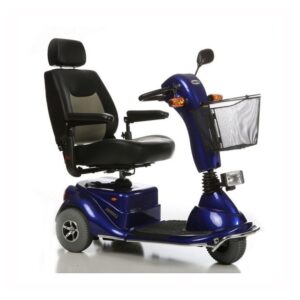
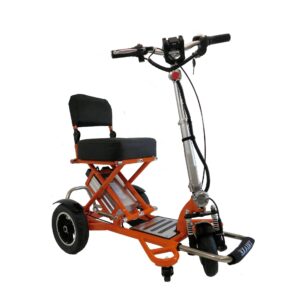
A three-wheel scooter suits riders who move through tight indoor routes, park in small apartments, or lift pieces into a sedan trunk several times a week. The single front wheel lets the whole machine pivot in place more readily, which matters when you need to turn around between a recliner and a coffee table.
It does not suit anyone whose driveway has loose gravel, whose yard slopes more than a few degrees sideways, or who carries a passenger regularly. Those conditions shift weight off one rear wheel fast enough that the scooter can tip before the rider feels the change coming.
Three Wheels or Four: The Real Decision
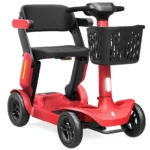
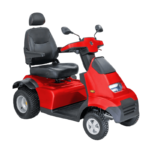
Four wheels keep two tires planted on each side at all times. That extra contact patch resists tipping when the ground tilts or when you hit a dip at an angle. Three wheels trade that margin for a shorter wheelbase and simpler steering geometry.
Three points always define a plane, so a three-wheel scooter stays flat on uneven floors, doorway thresholds, and mildly crowned pavement. A four-wheel scooter can rock like a wobbly table and briefly lift one rear drive wheel, losing traction for a moment. The trade-off is real: the single front wheel narrows the front of the support triangle, which is exactly why three-wheel models feel less secure on any sideways slope.
Buyers who cross grass, gravel, or any crowned road surface should start with the four-wheel collection instead. Everyone else can stay here without giving up real capability.
The Main Types You Will See
Travel and Folding 3-Wheel Scooters
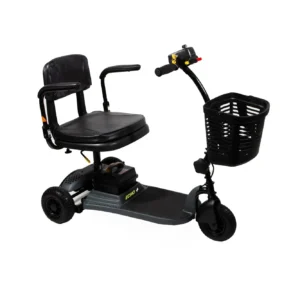
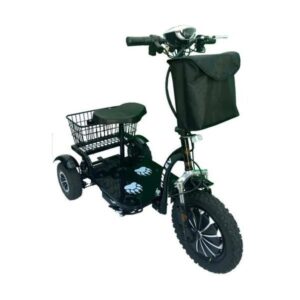
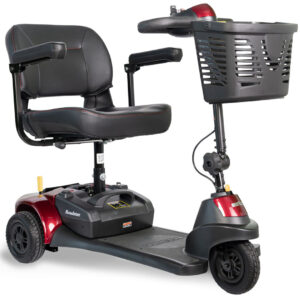
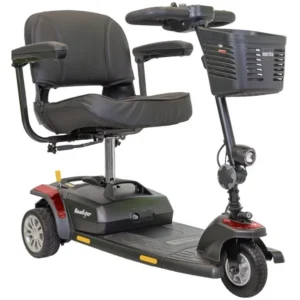
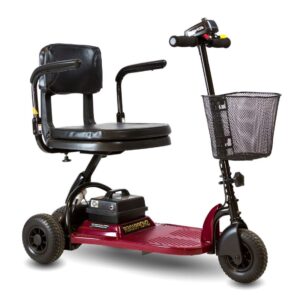
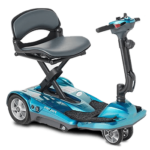
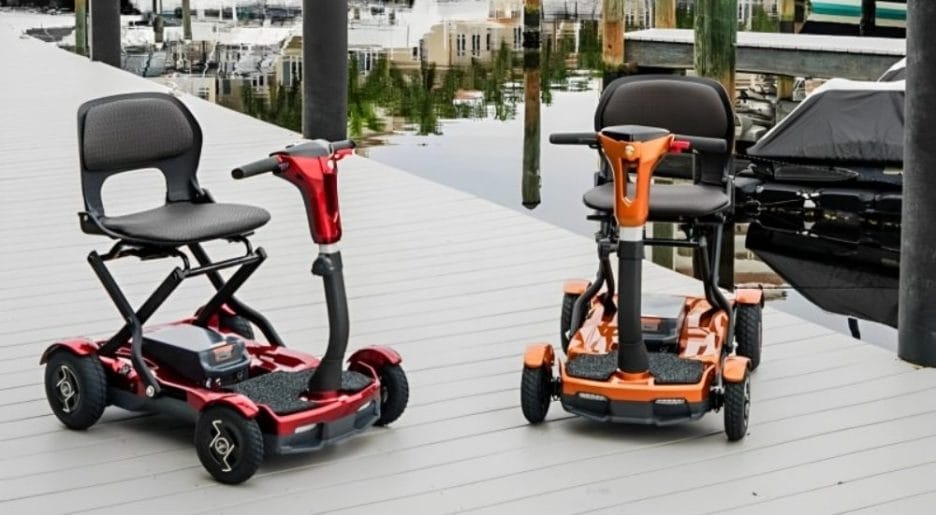
Travel models break or fold small enough for a back seat or airplane cargo hold. Shoprider Echo+ at $999 and Merits Roadster at $1,049 both come apart into liftable pieces and stay under 400 lb capacity. The EV Rider Transport 4AF at $1,895 folds itself at the touch of a button when you need to move it quickly between rooms or cars.
Heavy-Duty 3-Wheel Scooters
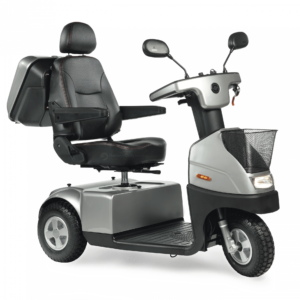
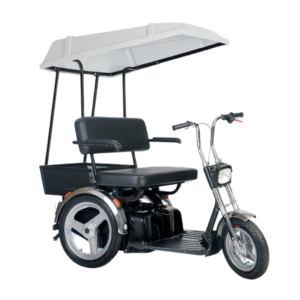
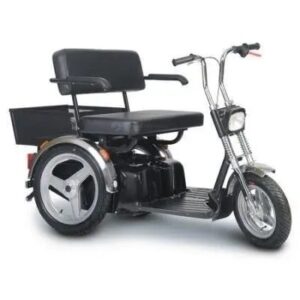
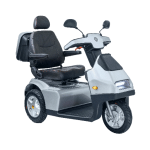
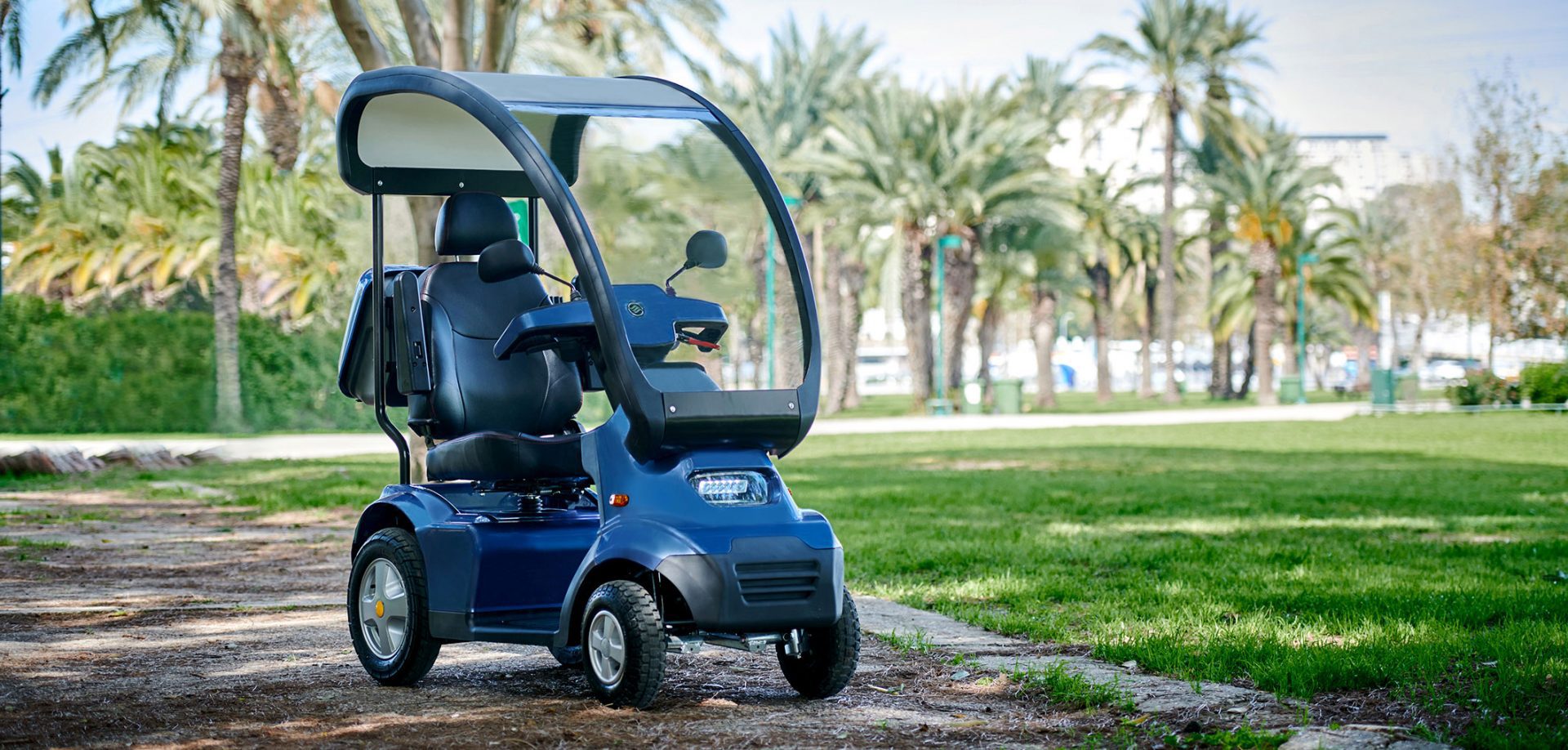
Heavy-duty three-wheel scooters add reinforced frames and larger batteries for daily outdoor use. Afiscooter C3 at $4,229 and Merits Pioneer 9 at $3,539 both handle 450 lb and deliver the longest real-world range we stock in this class. For riders over 500 lb, Afiscooter S3 600-lb at $7,359 carries the load on a 24-inch seat and still moves on grass or packed dirt.
Fast and Multi-Passenger 3-Wheel Scooters
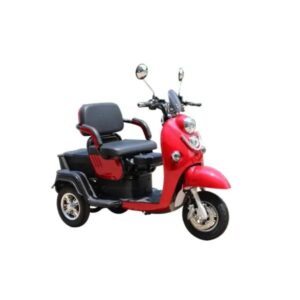
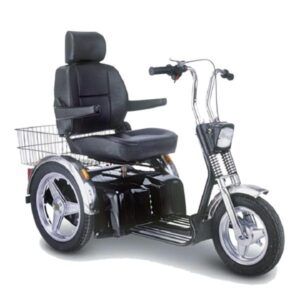
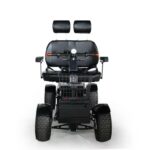
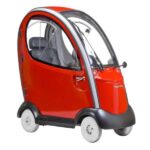
Fast or multi-passenger models add speed and a second seat. Pushpak 1000 at $4,695 seats two at higher speeds and still rates 450 lb. Pushpak 4000 at $5,095 seats three when you need to move a rider plus a helper or grandchild.
How to Choose Without Regret
Add at least twenty pounds to your listed weight for a winter coat, a bag of groceries, and the oxygen concentrator you might add later. Every capacity number on this page already subtracts the scooter itself, so round up.
Measure the narrowest doorway and the tightest turn between rooms. A three-wheel scooter will clear those spaces more often than a four-wheel model of the same length. If the fit looks tight, stay with three wheels.
Check how often you will lift the scooter. Travel models come apart into pieces an average adult can move. Anything heavier than that belongs on a vehicle lift or stays on four wheels so you do not fight it alone.
Terrain decides the rest. Flat pavement and indoor floors reward three wheels. Anything that tilts sideways or gives under the tire rewards four.
A few practical points the spec sheets skip
- A three-wheel scooter has one fewer tire, which means one less place for air to leak and one fewer tire and tube to replace over years of ownership.
- When broken down for transport, the single front assembly packs into a narrower trunk space than a two-wheel front end of the same class.
- Fewer wheels overall means fewer wheel bearings and steering forks that will eventually need service or replacement.




 4.7
4.7